
Frequently asked questions
-
Unfortunately, no. While the U.S. government has ended the Public Health Emergency status that gave people expanded benefit access, the SARS-CoV-2 (COVID-19) pandemic is far from over. In fact, there is more SARS-CoV-2 circulating now than at the onset of the pandemic, when stay-at-home orders were put in effect.
See how much SARS-CoV-2 is currently circulating here: https://www.pmc19.com/data/index.php
-
While contracting SARS-CoV-2 (COVID-19) can create antibodies against the strain you have, there are multiple reasons why you cannot yet become truly immune to SARS-CoV-2:
There are now dozens of variants, meaning you can become infected repeatedly with any of the many circulating strains.
Immunity wains over time. Regardless of whether your partial immunity comes from a former infection, vaccine, or monoclonal antibody infusions, your immunity increases for about two weeks as your immune system builds a response, and then it dissipates, leaving you with extremely limited or no immunity as soon as a couple of months after your event.
Repeated SARS-CoV-2 infections can lead to lymphocytopenia (immune exhaustion commonly seen in chemotherapy and AIDS patients). The immune system is NOT a muscle- it can become depleted or even completely reset by viruses. When your immune system has been wiped out, it cannot mount any response to viral or bacterial infections.
-
This is false. SARS-CoV-2 (COVID-19) is a disabling and deadly virus for animals and people of all ages and health statuses- just because your symptoms are lessened or absent during the acute phase of your infection does not mean the virus has not done any damage.
At the below website, you can access nearly half a million scientific research articles published on studies of SARS-CoV-2:
https://www.ncbi.nlm.nih.gov/research/coronavirus/
You can read all about the insidious effects of even an asymptomatic infection, ranging from tooth decay and loss, to cardiac arrests and strokes, to inducing autoimmune diseases, cancer, dementia, and Alzheimer’s and Parkinson’s diseases, among others.
-
Unfortunately, no- while the vaccine can improve your chances of avoiding severe acute symptoms causing hospitalization or death, it is not sterilizing or permanent, especially due to the numerous variants and constant mutation of the virus to improve its’ ability to infect and transmit.
Whether you get the mRNA vaccines (Pfizer, Moderna) or the non-mRNA, protein-based vaccine (Novavax), your already incomplete protection begins to wane within weeks or months.
It is very important to get a COVID-19 vaccine at least annually if you are medically able, but it is not the be-all, end-all solution to eradicating SARS-CoV-2.
-
Not when we are dealing with infectious airborne diseases like measles, influenza, SARS-CoV-2 (COVID-19), RSV, and rhinoviruses (the “common cold”).
While sanitizing surfaces and washing your hands are excellent general health hygiene practices, respiratory pathogens are spread through the aerosolization of infectious particles, occurring whenever the infectious person breathes, sings, coughs, sneezes, or talks. These infectious aerosols can hang in the air for hours, and infect you in seconds.
Here is a great video to help you visualize the reality of airborne spread: https://youtu.be/uswi6gklC-I?si=eJQWcwrKDUMJEjiR
-
By doing every little thing you can, as we know not one measure is perfect or enough!
We abide by the “Swiss Cheese Model” (SCM) of risk prevention here at Mask Up Amsterdam…
The Swiss cheese model is a visual framework for analyzing accidents and adverse events in complex systems. Developed by James Reason in 1990, the SCM illustrates how accidents occur when multiple layers of defense, represented as slices of Swiss cheese, align through holes. These holes symbolize various failures or unsafe conditions, which can randomly open and close.
The SCM distinguishes between "unsafe acts" (personal, direct actions that lead to accidents) and latent organizational conditions (shared responsibilities that may go unnoticed but contribute to individual unsafe acts).
By focusing on the interactions between certain levels of failure, the SCM promotes a systems-oriented approach to safety. It urges investigators to look beyond individual errors to the underlying processes within organizations and how they affect the conditions for success.
Ultimately, the Swiss cheese model serves as a tool for enhancing safety and preventing future incidents by improving organizational resilience and response strategies and encouraging individuals to accept their individual and shared responsibilities for community safety.
Here is a great visualization of the Swiss Cheese Model as it applies to preventing the spread of airborne illnesses: https://drive.proton.me/urls/AB0MB2MWRM#CCqerQ6YQpzo
-
Decades of science have proven the effectiveness of respirators in healthcare, construction, and other hazardous spaces where the air is not safe to breathe. Where the confusion typically lies is in the type and fit of the mask and how that changes the effectiveness and protection of the wearer and those around them.
Back in 2020 near the onset of the ongoing SARS-CoV-2 pandemic, the US government asked citizens to make and wear cloth masks and refrain from stocking up on the N95 and P100 respirators healthcare and other essential workers needed to keep themselves safe while the factories made more. Unfortunately, they never really announced when that shortage ended, nor did they truly encourage people to ditch the cloth masks and loose blue procedural masks that provided very little protection and find proper-fitting respirators.
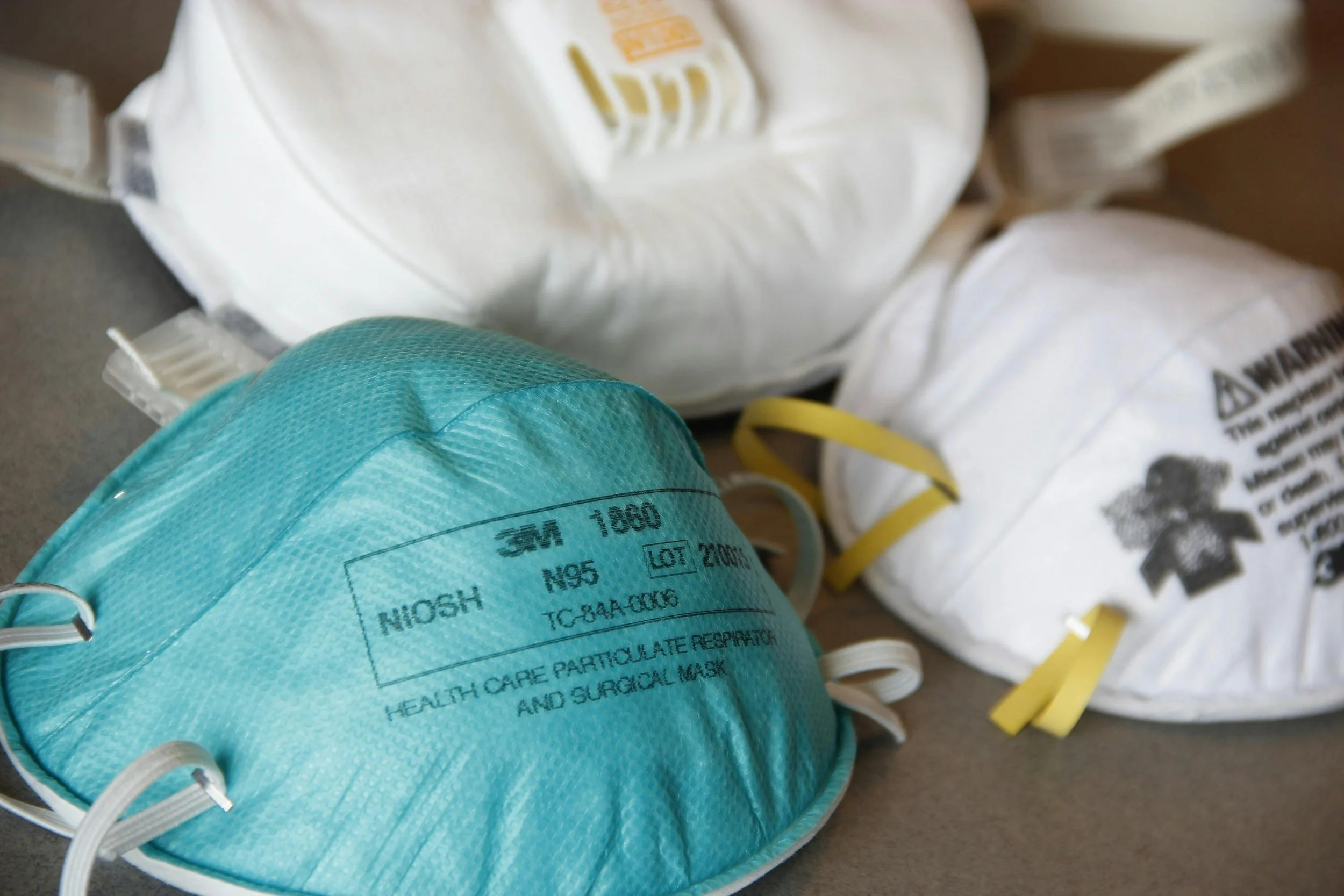
In order to keep yourself and others safe from contracting or transmitting illnesses like influenza, measles, SARS-CoV-2 (COVID-19), RSV, and rhinoviruses (the “common cold”), you must wear a tight-fitting KF-94/KN-95, N95, or P100 respirator that leaves no gaps and allows you to pinch the nose piece tightly to completely seal your mouth and nose under the mask material.
When properly fitted, your mask will force your breath to be filtered by the electrostatic layers of the mask before being released clear of virus and particles on the other side of the material and vice versa.
Here is a good video showing how to properly put on and fit an N95 respirator with head straps: https://m.youtube.com/watch?v=UaoHiTDbCZ4
-
Unfortunately, no, for a couple of reasons…
About 40% of people who contract SARS-CoV-2 (COVID-19) will not develop any symptoms of the disease, yet they remain as infectious as someone who has been hospitalized. If you are not testing with a PCR or NAAT test daily, you may not know that you are infected. Being asymptomatic does not mean you have a “mild” variant or that your body isn’t suffering any damage—in fact, the virus does significant organ damage regardless of your acute disease severity. This means anyone at any time could be infectious and not know it, spreading their infectious aerosols everywhere they breathe without wearing a respirator.
People are often pre-symptomatic, meaning they are infectious a few days before they develop symptoms. Just because you or someone else feels fine does not mean they aren’t infected and actively spreading disease without their knowledge!
If you MUST be in the company of others instead of in isolation when you are ill, then wearing a tight-fitting, high-quality respirator (KF-94/KN-95 or better) is obviously a great first step to avoid spreading your disease.
But wearing a well-fitting respirator at all times in all public spaces, indoor and out, is the best way to protect yourself and your community from spreading airborne diseases.
-
As demonstrated in our graphic of the Swiss Cheese Model of risk assessment, ventilation and air filtration are important organization-level efforts that can help with cleaning the air and make it safer to gather.
Since the onset of the ongoing SARS-CoV-2 (COVID-19) pandemic, public health entities have pushed to hold as many events outdoors as possible because of the improved ventilation. When we gather inside, exhaled breath (CO2) compounds and lingers in an unventilated space, creating a container for the viral particles to collect and hang for hours, infecting anyone who enters.
By taking a few simple measures to ventilate and filtrate, we can clean the air and help make indoor spaces safe:
Open the windows to improve fresh airflow.
Turn your HVAC system fan to permanently “ON” instead of “AUTO” and ensure you have a MERV-11/12 filter or higher installed to improve both ventilation and filtration in your entire space.
Install HEPA-level air purifiers or Corsi-Rosenthal boxes to improve filtration and constantly clean the air of viruses, smoke, allergens, dust, and mold.
-
If you are feeling ill, you are almost certainly infected with one of the many viruses blazing through our communities. Getting tested not only helps you and your physician log your infection in your records for current and future treatment plans, but it lets them report it to the organizations that track disease rates and alert others to the dangers of spreading pathogens. Additionally, it may help you achieve the elusive paid sick leave/PTO, as you can prove to your employer you are, in fact, ill and unable to work.
If no one is testing, no one is reporting, which makes it appear as if disease is not spreading when it is, endangering everyone in the community by suppressing knowledge and data we can use to protect each other instead.
When multiple illnesses in a community surge simultaneously, knowing whether you’ve contracted COVID-19, influenza A or B, RSV, or a combination directly effects your treatment plan and informs public health and safety decisions outside of your personal experience.
As we mentioned before, about 40% of people who contract SARS-CoV-2 (COVID-19) will not develop any symptoms of the disease, yet they remain as infectious as someone who has been hospitalized.
If you are not testing with a PCR or NAAT test daily, as RAT (rapid tests commonly used at home) are less sensitive and can miss many infections, you may not know that you are infected.
While daily testing has been made cost-prohibitive by the US government and healthcare system, we still advocate for it. Additionally, we acknowledge that testing when you are ill (instead of assuming or ignoring, or pushing through) is, at a minimum, a crucial slice of the Swiss Cheese Model to helping stop the spread of illness.
If you recently tested positive at home, please report your result here: https://learn.makemytestcount.org/